
In the high-stakes world of luxury interiors, a “lead” isn’t just a name and an email address. It’s a potential multi-month partnership, a creative collaboration, and a significant financial investment. Unlike low-ticket e-commerce, interior design leads generation requires a sophisticated blend of visual storytelling, local authority, and technical SEO.
If your portfolio is stunning but your inbox is quiet, the problem isn’t your talent—it’s your funnel. In 2026, the landscape has shifted from “shouting at everyone” on social media to “being the answer” when high-intent clients start searching.
1. The Psychology of the Modern Interior Design Client
Before diving into tactics, we must understand the 2026 client. They are “inspiration-saturated.” Between AI-generated mood boards and endless scrolling on Pinterest, they know what they like, but they are overwhelmed by the execution.
They aren’t looking for a “decorator”; they are looking for a guide who can navigate supply chain complexities and spatial logic. Your lead generation strategy must reflect this authority.
2. Foundation First: The “Authority” Website
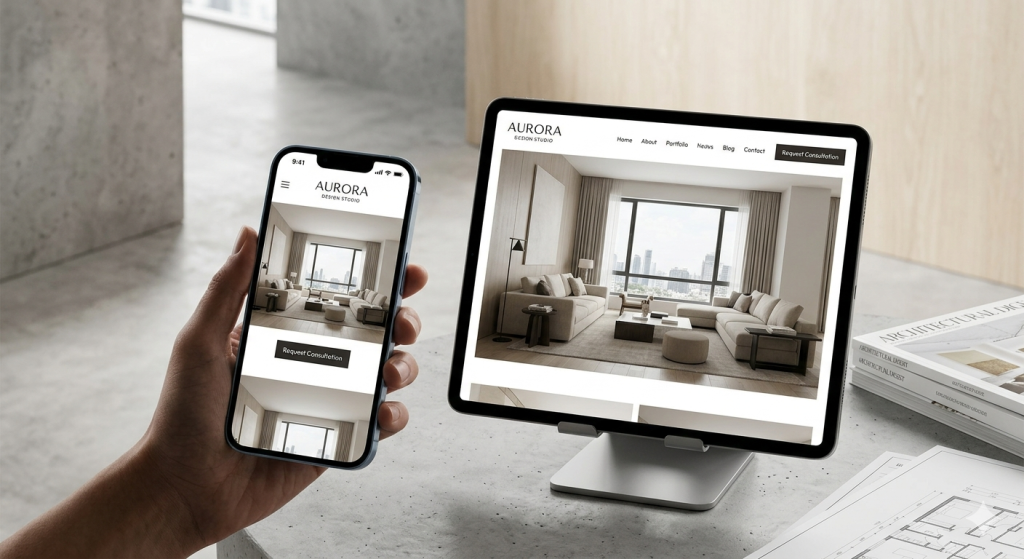
Your website is no longer a static brochure; it is your 24/7 sales representative. For effective interior design leads generation, your site must be optimized for two audiences: Google’s crawlers and the human eye.
Technical SEO & Performance
- Visual Optimization: High-resolution images are non-negotiable, but they must be served in next-gen formats (like WebP) to ensure lightning-fast load times. A three-second delay can cost you a five-figure project.
- Mobile-First Design: 80% of initial “dreaming” and discovery happens on mobile devices. If your gallery is hard to navigate on a phone, you’ve lost the lead.
Content Clusters (The “Answer” Engine)
Stop targeting broad keywords like “interior designer.” Instead, build topical authority by answering specific, high-intent questions:
- “How to integrate smart home technology into a minimalist kitchen?”
- “The cost of luxury bathroom renovations in [Your City] 2026.”
- “Sustainable material choices for coastal residential designs.”
By ranking for these specific queries, you capture clients at the exact moment they are problem-solving, not just browsing.
3. Local SEO: Dominating Your Territory
Interior design is inherently local. You need to be the “Top-of-Mind” designer in your specific zip code.
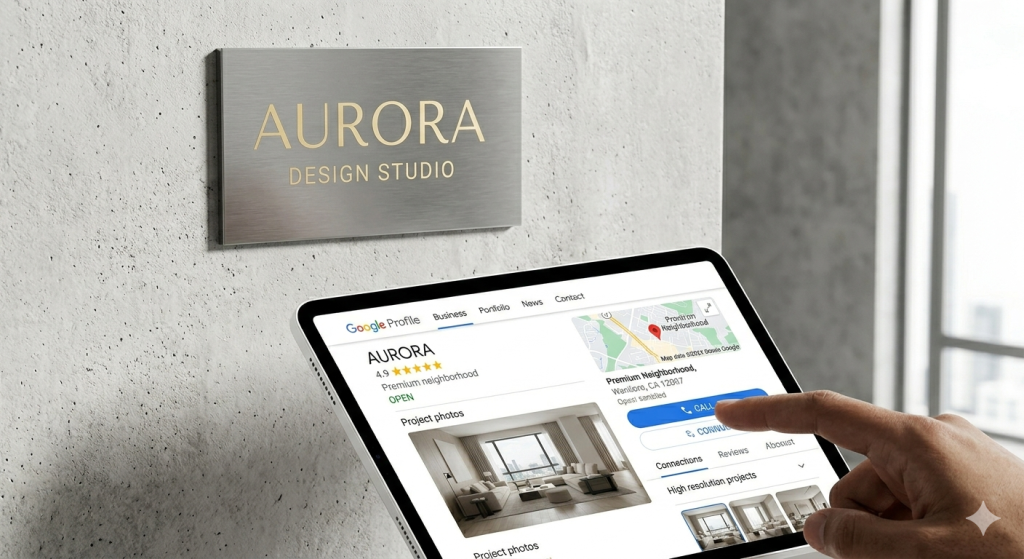
Google Business Profile (GBP) Optimization
Your GBP is often the first thing a local client sees. It is the “front door” of your digital studio.
- Active Updates: Post weekly updates of “Work in Progress” shots.
- Review Velocity: Don’t just ask for reviews; ask clients to mention specific services (e.g., “The kitchen remodel was seamless”).
- Local Attributes: Ensure you are tagged for “Small Business,” “Women-Owned,” or other relevant local identifiers that modern consumers prioritize.
4. Visual Lead Magnets: Moving from Browser to Subscriber
The biggest mistake designers make is having a “Contact Us” page as their only call to action. Most visitors aren’t ready to hire you today. You need a “Middle of the Funnel” (MOFU) offer to capture their information.
High-Converting Lead Magnet Ideas:
- The “2026 Luxury Style Guide”: A PDF showcasing upcoming trends in textures and colors.
- The Budget Calculator: An interactive tool that helps them estimate the investment for a specific room type.
- The “Designer Selection Checklist”: A 10-point guide on what to ask before hiring a professional.
By offering value first, you establish trust and gain the ability to nurture the lead via email marketing until they are ready to sign a contract.
5. Leveraging “Inspiration” Platforms: Pinterest & Instagram
In 2026, social media for designers is less about “likes” and more about search intent.
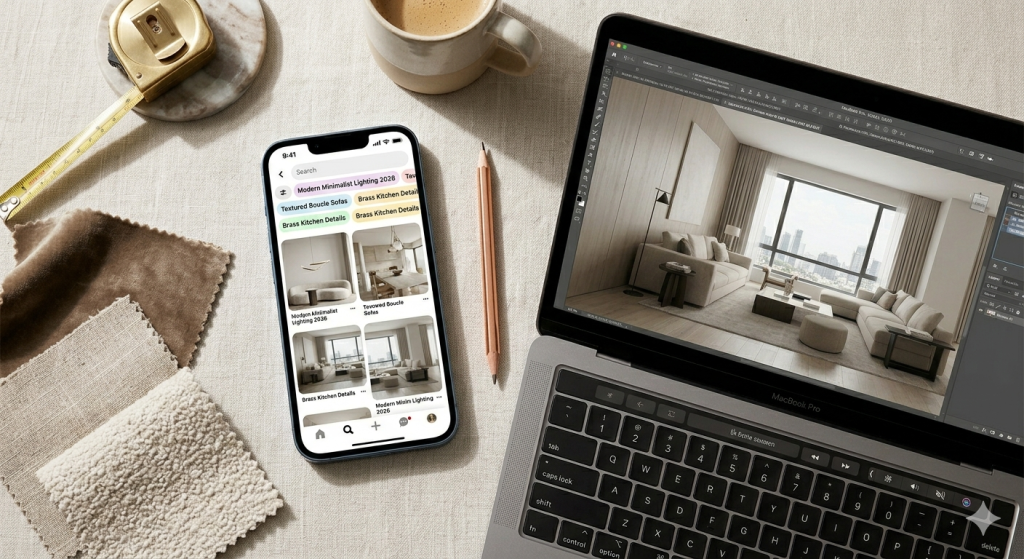
- Pinterest as a Search Engine: Treat every Pin like a mini-blog post. Use keyword-rich descriptions like “modern farmhouse living room ideas with black accents” rather than “My latest project.”
- Instagram Reels for Process: Show the “ugly” side—the dusty construction sites, the fabric samples, the mood board iterations. People hire designers because the process is hard; showing that you can handle the chaos is a massive lead-gen trigger.
6. The 2026 Secret Weapon: Answer Engine Optimization (AEO)
With the rise of AI-driven search (like Perplexity and Google’s AI Overviews), your content needs to be structured so AI can easily “cite” you.
- Use FAQ Schema: Add a frequently asked questions section to every project page.
- Direct Language: Instead of flowery prose, use clear headers. Instead of “A Symphony of Light and Shadow,” use “How to Maximize Natural Light in North-Facing Living Rooms.”
7. Tracking What Matters
You cannot improve what you do not measure. For interior design leads generation, you should be looking at more than just traffic.
- Cost Per Lead (CPL): How much are you spending (in time or ads) to get one qualified inquiry?
- Lead-to-Discovery Call Ratio: Are the leads you’re getting actually the right “flavor” for your brand?
- Traffic Source: Are your best leads coming from a specific blog post or a local search?
8. Strategic Networking & “Hidden” Lead Sources
Don’t overlook the power of the “Professional Referral Loop.” In the Gulf and other high-growth markets, your best leads often come from non-competing professionals in the same orbit:
- Real Estate Agents: High-end agents selling “fixer-uppers” to wealthy clients.
- Architects: Often the first point of contact for new builds.
- Smart Home Integrators: A niche but growing source of high-tech luxury leads.
Establish a reciprocal referral program. When you refer a client to a trusted contractor, they are incentivized to return the favor.
Conclusion: Consistency is the Real Secret
Generating leads for interior design isn’t a “one-off” task; it’s a system. By combining high-authority content, localized SEO, and visual storytelling, you create an engine that brings clients to you.
The goal isn’t to be everywhere—it’s to be exactly where your ideal client is looking when they finally decide that their home deserves more than just a “DIY” effort.
Start today by optimizing your Google Business Profile and creating one High-Value Lead Magnet. The projects of 2027 are being researched right now—make sure it’s your name they find.